Ebola cases double in Congo – 35 dead, nearly 400 people may be infected

The number of Ebola cases in the Democratic Republic of Congo doubled over the past week to 62, the World Health Organization reported Thursday, and more than half the afflicted patients have died. The outbreak in the country, where the Ebola virus was first discovered nearly 40 years ago, is a distinct strain from the far more drastic Ebola crisis ravaging West Africa, where more than 2,200 people have died this year, the worst on record. The Congo outbreak, by contrast, is confined to four villages in one county, and is linked to one initial case, first reported to the health organization on Aug.
How deadly is Ebola? Statistical challenges may be inflating survival rate

The Ebola virus that is causing the raging epidemic in West Africa is famously lethal. In previous outbreaks it has killed as many as 90% of the people it infects. That’s why the figures in World Health Organization’s (WHO’s) latest “Situation Report” look like they might be a rare glimmer of good news.

Scientific Model: 1.2 Million Will Be Dead From Ebola In 6 Months

An econometric simulation model based on the assumption the World Health Organization and others will be unable to control the Ebola outbreak in West Africa predicts 1.2 million people will die from the disease in the next six months. Six months is the minimum time the WHO projects will be necessary to contain the epidemic.

No More Places To Put Ebola Patients In Liberia But Cases Are Growing Exponentially

There is not a single empty bed available for an Ebola patient in Liberia right now, but thousands more cases are expected in the coming weeks. Entire families have been driving around in taxis looking for some place that will take their sick family members, but every treatment facility is already full. According to the World Health Organization, many of those potential Ebola patients end up returning to their homes where there will inevitably spread the virus to even more people.

Doctor: Ebola virus cases may be underreported by as much ‘double or triple’ – ‘more contagious than we’re being told’

With the possibility of the Ebola outbreak widening in the region and eventually spanning the globe, this writer reached out to Board Certified Internal Medicine specialist Dr. Jorge Rodriguez for more information. During an interview on Saturday’s “Pure Opelka” radio program, Rodriguez, the show’s frequent medical contributor, shared some of his concerns about the latest news in the Ebola story.

WHO: 1 in 10 health workers treating Ebola become infected

One in 10 health-care workers treating Ebola patients in West Africa are becoming infected with the disease, the World Health Organization announced in Geneva Friday in an international media teleconference at the conclusion of an emergency meeting on the outbreak. The WHO invited medical experts from around the world to the two-day meeting to discuss using experimental and alternative treatments to combat the Ebola crisis, which the U.N.

Ebola deaths pass 2,000 as Liberia shuts down contaminated police station and Sierra Leone’s capital ‘crumbles’

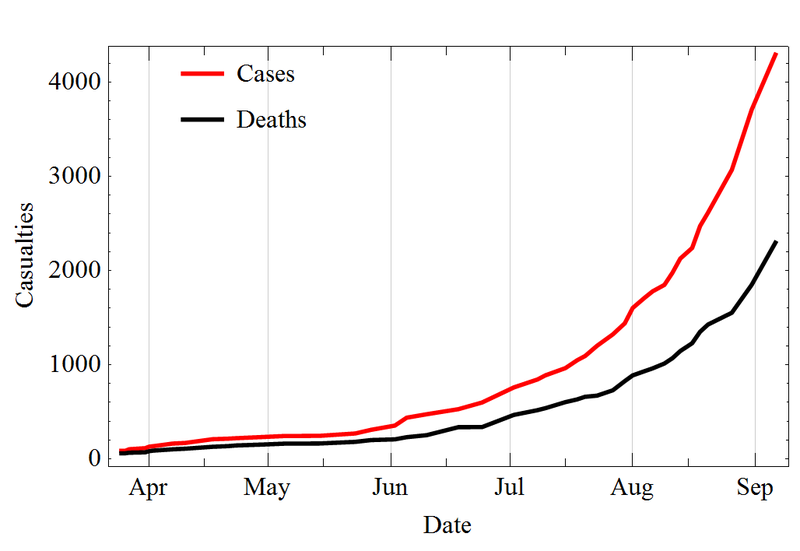
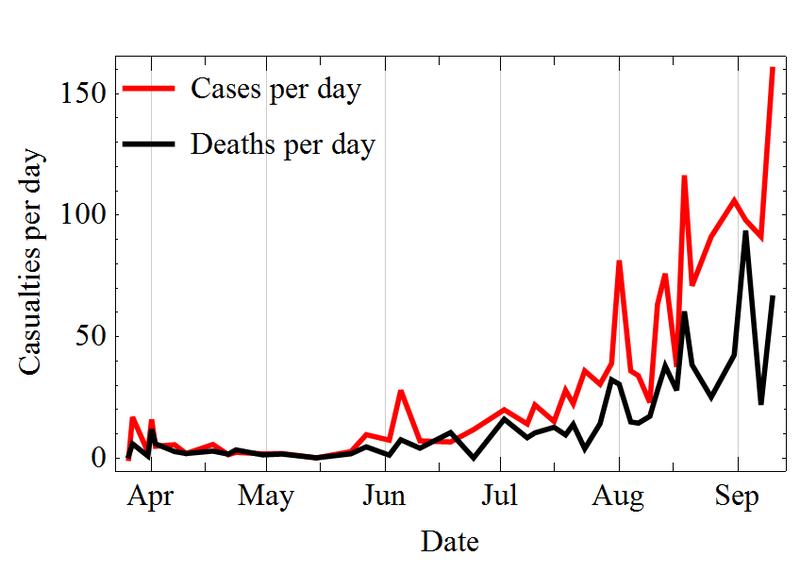
The Ebola outbreak in West Africa has accelerated quickly with almost 1,000 deaths in the last month alone, according to the latest World Health Organisation figures. The United Nations is establishing an Ebola Crisis Centre with the goal of stopping transmission in affected countries within six to nine months, the UN chief said, as the death toll from the outbreak surpassed 2,000 for the first time. WHO said the number of people who have died in the outbreak has reached 2,097 across five West Africa countries, with about half the deaths in Liberia.

Ebola outbreak racing out of control, officials say

The Ebola outbreak in West Africa is “racing ahead” of efforts to control it, and controlling the epidemic will cost at least $600 million, world health officials said Wednesday. The number of people infected with Ebola has grown to 3,500, with more than 1,900 deaths, according to the World Health Organization, or WHO. “We do need a major response,” said Margaret Chan, the director-general of the WHO.