Could Mt. Fuji be the next volcano to erupt in Japan?

The sudden eruption of Mount Ontake over the weekend, which is believed to have killed dozens of people, was a reminder of Japan’s vulnerability to its many active volcanoes. Gas continued to pour from the ruptured crater Monday as emergency workers tried to reach the bodies of hikers trapped on the peak when it roared into life. Ontake is one of 110 live volcanoes dotted throughout the seismically-active country, including Mount Fuji, the country’s tallest mountain and a UNESCO World Heritage Site that welcomes some 300,000 climbers each year.

CDC Warns Funeral Homes in U.S. to Prepare For Ebola Victims

The Centers for Disease Control is advising funeral homes in the United States on how to handle the remains of Ebola victims, although officials are keen to stress that the development is not a cause for alarm. A three page list of recommendations instructs funeral workers to wear protective gear while handling Ebola victims, as well as warning them not to carry out autopsies or to embalm corpses. “If the outbreak of the potentially deadly virus is in West Africa, why are funeral homes in America being given guidelines?

World wildlife populations cut in half over the past 40 years – report

The global loss of species is even worse than previously thought, the London Zoological Society (ZSL) says in its new Living Planet Index. The report suggests populations have halved in 40 years, as new methodology gives more alarming results than in a report two years ago. The report says populations of mammals, birds, reptiles, amphibians and fish have declined by an average of 52%.

New mosquito-borne illness spreading across Latin America – victims describe disease as ’10 days of near unbearable pain’

An excruciating mosquito-borne illness that arrived less than a year ago in the Americas is raging across the region, leaping from the Caribbean to the Central and South American mainland, and infecting more than 1 million people. Some cases already have emerged in the United States. While the disease, called Chikungunya, usually is not fatal, the epidemic has overwhelmed hospitals, cut economic productivity and caused its sufferers days of pain and misery.

82 percent of Ebola patients are being turned away from hospitals to die at home, spreading infections to family members

A lack of available hospital beds in Liberia, Sierra Leone and Guinea, the three countries at the epicenter of the worst Ebola outbreak in history, is leaving many families with nowhere to take their sick and dying. More than 80 percent of Ebola patients, in fact, are being turned away from hospitals and sent back home, where they continue to spread the disease to family members, friends and others in the community. A major shortage of beds and healthcare workers throughout the region has created an every-man-for-himself situation in which infected folks are having to basically fend for themselves.

Daily household water allocation could be the next California drought strategy

As California’s severe drought moves into a fourth year, state and local water agencies are working on something called “allocation-based rate structures,” a kind of precursor to water rationing that’s all the rage in Sacramento and in some areas such as Santa Cruz, Irvine and Santa Monica. Here’s how it works: Your local water company, special district or city assigns you and your household a number in gallons — a daily water allocation.

The Pure Hell At The Heart Of The Ebola Pandemic In Africa Could Soon Be Coming To America

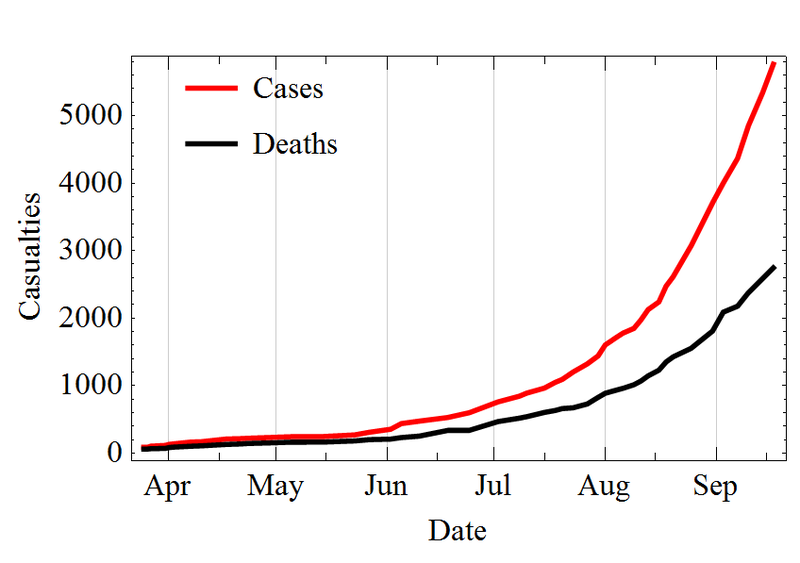
Did you know that the number of Ebola cases in Liberia and Sierra Leone is approximately doubling every 20 days? People are dropping dead in the streets, large numbers of bodies are being dumped into the rivers, and gravediggers can hardly keep up with the the number of corpses that are being delivered to the cemeteries. As you read this, life is pure hell in many areas of West Africa, and now the CDC is warning that things may get far, far worse in the very near future.

CDC warns universities to prepare for Ebola pandemic

American colleges and universities are now on high alert and are being instructed to take extra precautions against the potential spread of incoming Ebola. Students traveling abroad to Ebola-stricken countries like Liberia, Guinea, Nigeria or Sierra Leone run the risk of bringing the virus back to US campuses. The Centers for Disease Control (CDC) is now urging all US colleges to implement additional safety measures to prevent accidental spread of Ebola.

Sierra Leone’s Ebola shutdown uncovers 92 dead in capital, 56 new cases reported

Sierra Leone wrapped up its 72-hour shutdown on Sunday, with authorities reporting that the action aimed at containing the Ebola epidemic had uncovered up to 70 dead bodies in and around the capital. Most of the West African country’s six million people were confined to their homes for a third straight day, with only essential workers such as health professionals and security forces exempt. Almost 30,000 volunteers have been going door-to-door to educate locals and hand out soap, in an exercise that was expected to lead to scores more patients and bodies being discovered in homes.